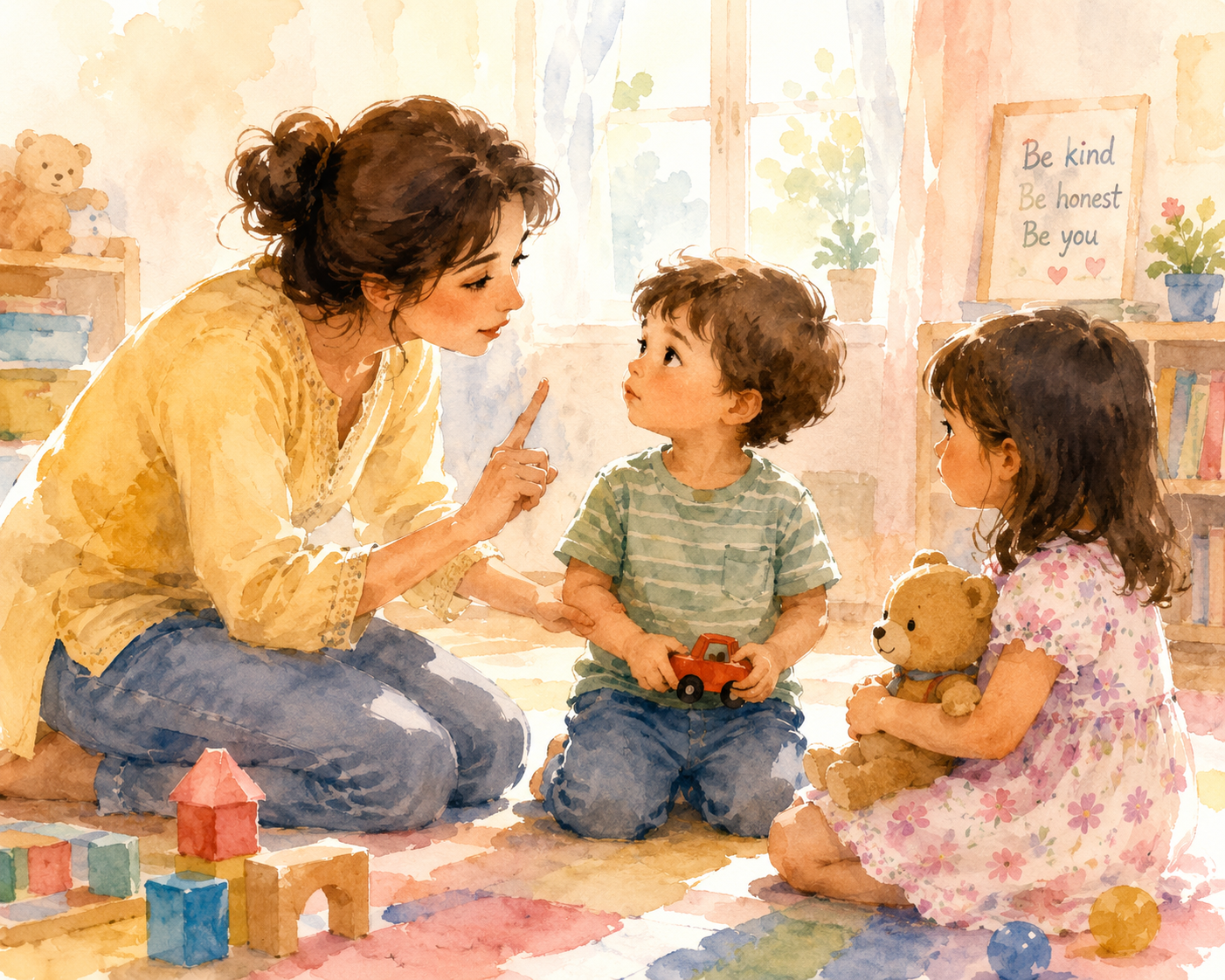
There is a moment that happens in almost every home, usually before a child can even speak in full sentences. A toddler reaches for something — a sibling's toy, a stranger's phone, a second helping of chocolate before dinner — and a parent says, gently or not so gently, "No."
What happens in the next ten seconds decides more than we realise.
Sometimes the child is distracted with something shinier. Sometimes the no is repeated louder until the crying stops. Sometimes, if the parent is tired enough, the no simply dissolves into a yes, because peace in that moment feels more urgent than principle. Rarely — far too rarely — does anyone sit with the child and ask, gently, why this is a no. Not "because I said so." Not "because it's not yours." But something closer to: because taking what isn't ours makes someone else feel small, and we don't want to be the reason for that.
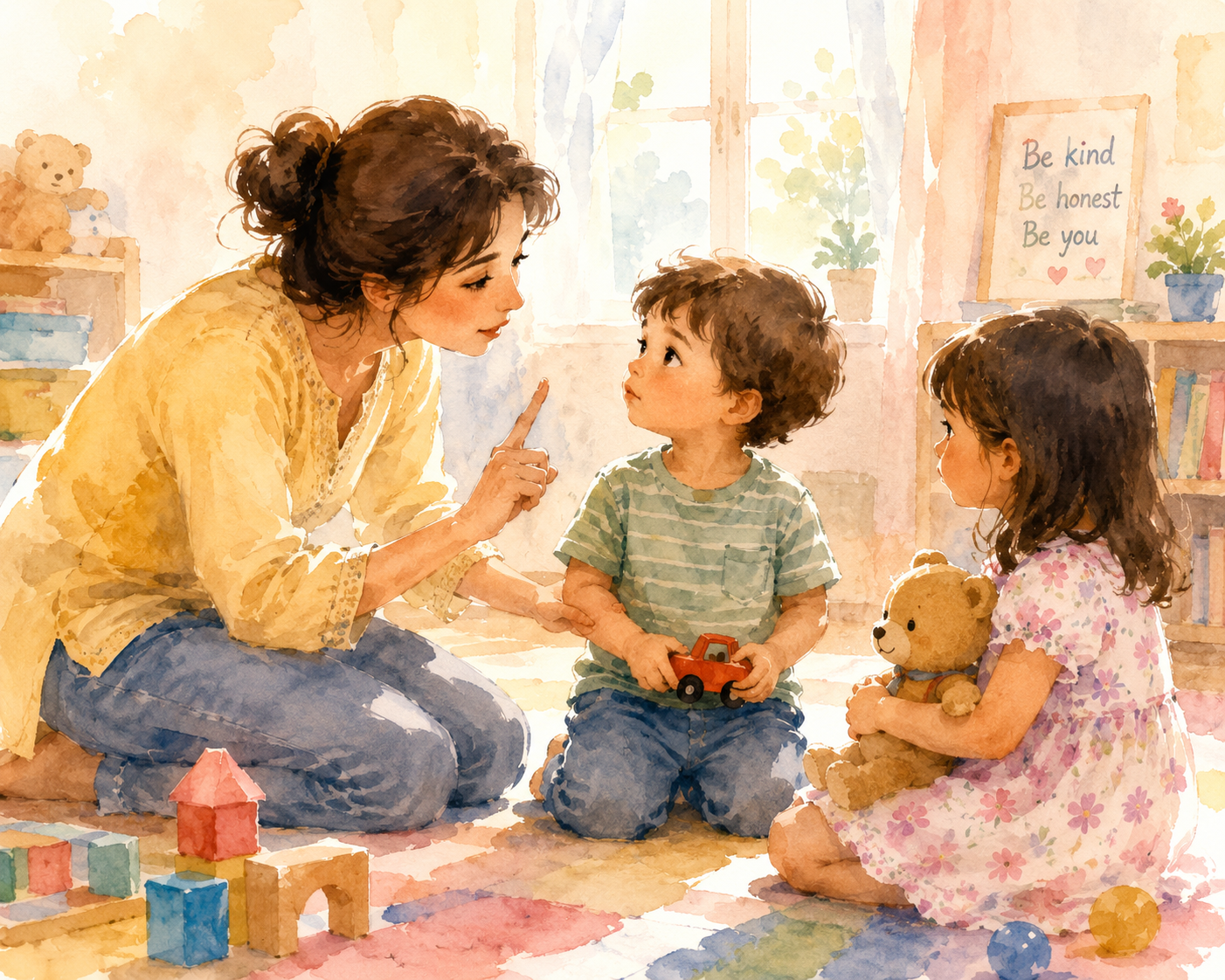
That missed moment, repeated a thousand times over a childhood, is where I believe the real story begins. Not in the courtrooms, not in the news cycles, not in the corruption scandals or the casual cruelty we now scroll past without flinching. It begins in the space between a child's yes and no — in whether anyone ever taught them why those words matter, or only that they must be obeyed.
The Seed We Forgot to Plant
We have become remarkably skilled at raising capable children. We teach them to read before other children their age, to solve for x, to code, to perform on stage, to speak fluent English with the right accent. We measure their growth in marks, medals, and milestones — all visible, all comparable, all satisfying to post about.
But conscience does not show up on a report card. There is no unit test for empathy, no rank list for honesty. And so, quietly, without anyone deciding it outright, moral development has slipped to the bottom of the parenting priority list — not because we don't value it, but because nothing is forcing us to attend to it the way school admissions and exam results do.
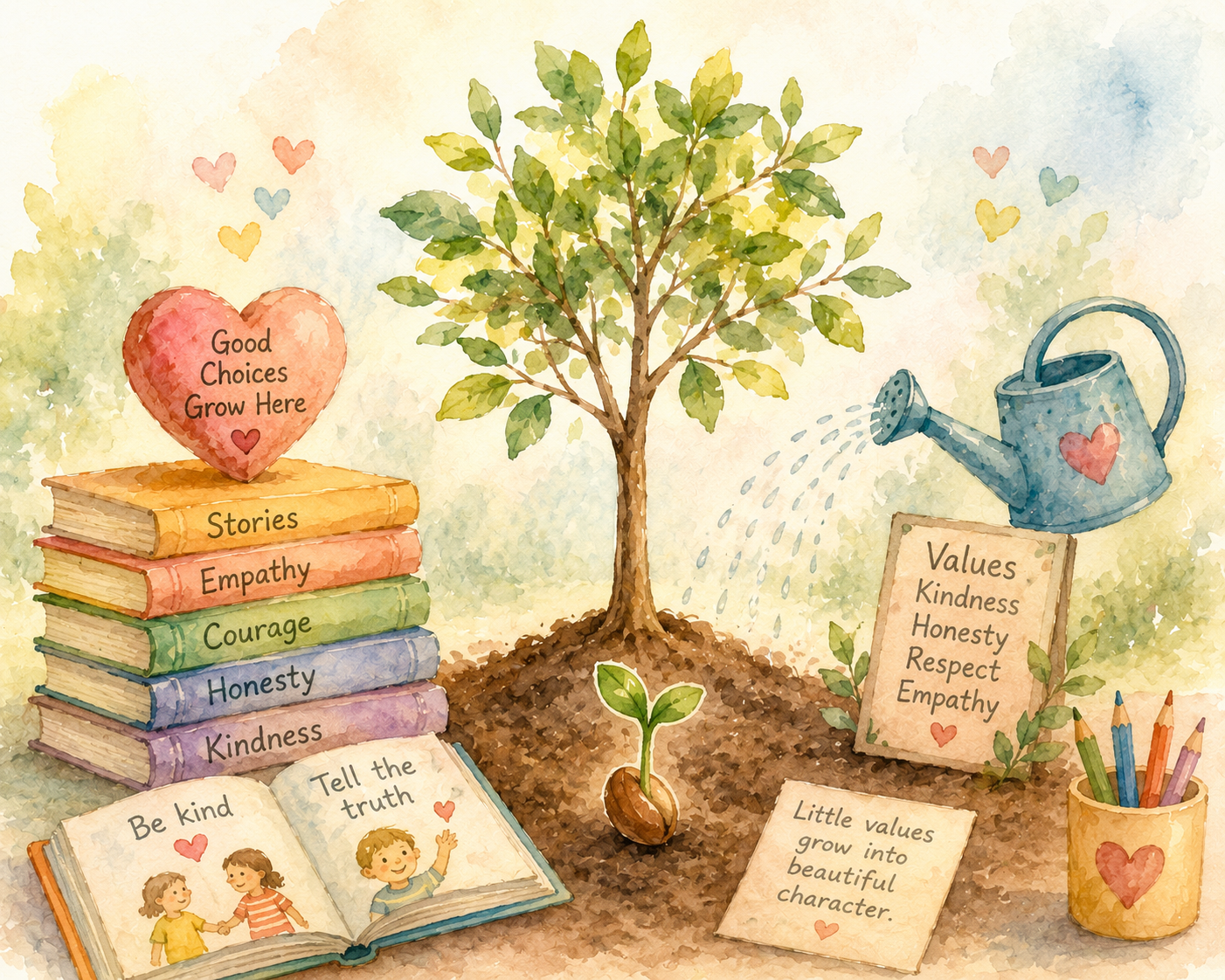
Here is what I have come to believe, after years of sitting across from children in classrooms and workshops, watching them up close: a child's moral voice is not something that appears on its own with age, like height or vocabulary. It has to be planted. And the soil for that planting is those very early years — the yes-and-no years — when a child is first learning that their choices touch other people.
When we only teach a child obedience ("do this because I said so"), we raise someone who behaves well when watched and falls apart when unsupervised. When we teach a child conscience ("do this because it's the kind thing, the honest thing, the right thing"), we raise someone who carries their own quiet witness with them everywhere — into the exam hall when no invigilator is looking, into the workplace when no one will ever know, into a marriage when honesty is inconvenient.
The difference between these two children looks identical at age four. It becomes the difference between two entirely different adults by age forty.
The Widening Gap
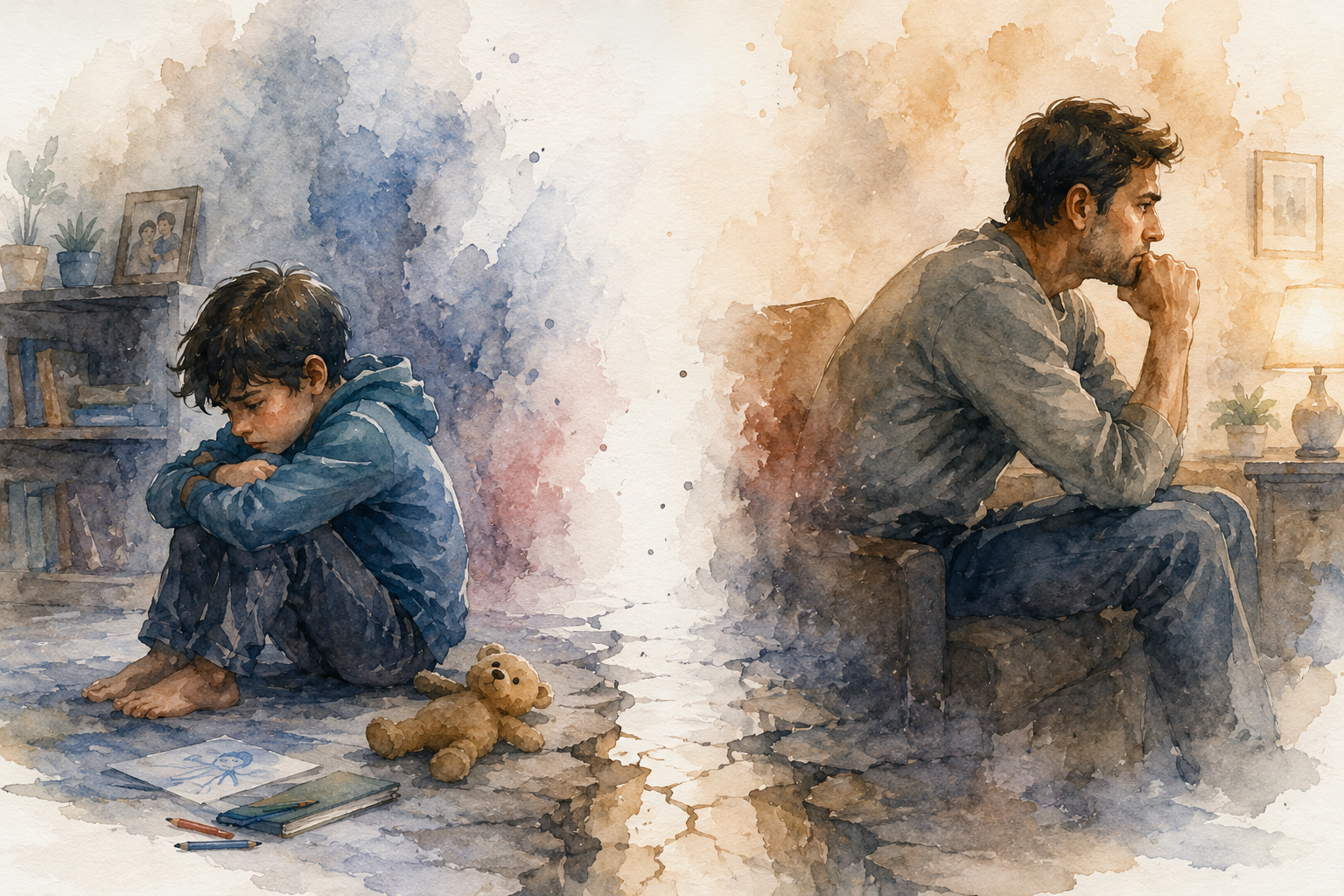
Let the child grow a little, and the gap — if left unattended — begins to widen on its own, almost like compound interest working against us.
By seven or eight, children are already skilled negotiators of right and wrong, but increasingly, the negotiation is with outcomes, not values. "Will I get caught?" replaces "Is this right?" We see it in small things first — a copied homework answer, a small lie about who broke the vase, a friend excluded from a birthday list to feel powerful. These are not signs of a "bad" child. They are completely normal moral experiments. But they are also teaching moments, and this is precisely where so many of us, exhausted and well-meaning, choose the easier road: we punish the act instead of illuminating the harm. We say "don't lie" instead of asking, "how do you think she felt when she found out?"
Punishment changes behaviour for a day. Reflection changes character for a lifetime. But reflection takes time, patience, and presence — three things modern life has quietly stolen from most households.
By the time a child reaches adolescence, the gap has often become a chasm. This is the age when the inner voice, if it was never nurtured, gets replaced by a louder, more persuasive one — the voice of the peer group, the algorithm, the follower count. A teenager who was taught early to ask "is this right?" will still ask that question at fifteen, even when it's unfashionable to. A teenager who was only ever taught "don't get caught" will simply become better at not getting caught. Cheating becomes cleverness. Cruelty online becomes "just a joke." Cutting someone down becomes content. And the tragedy is that none of this feels like decay from the inside — it feels like fitting in.
What We Call "Adult" Now
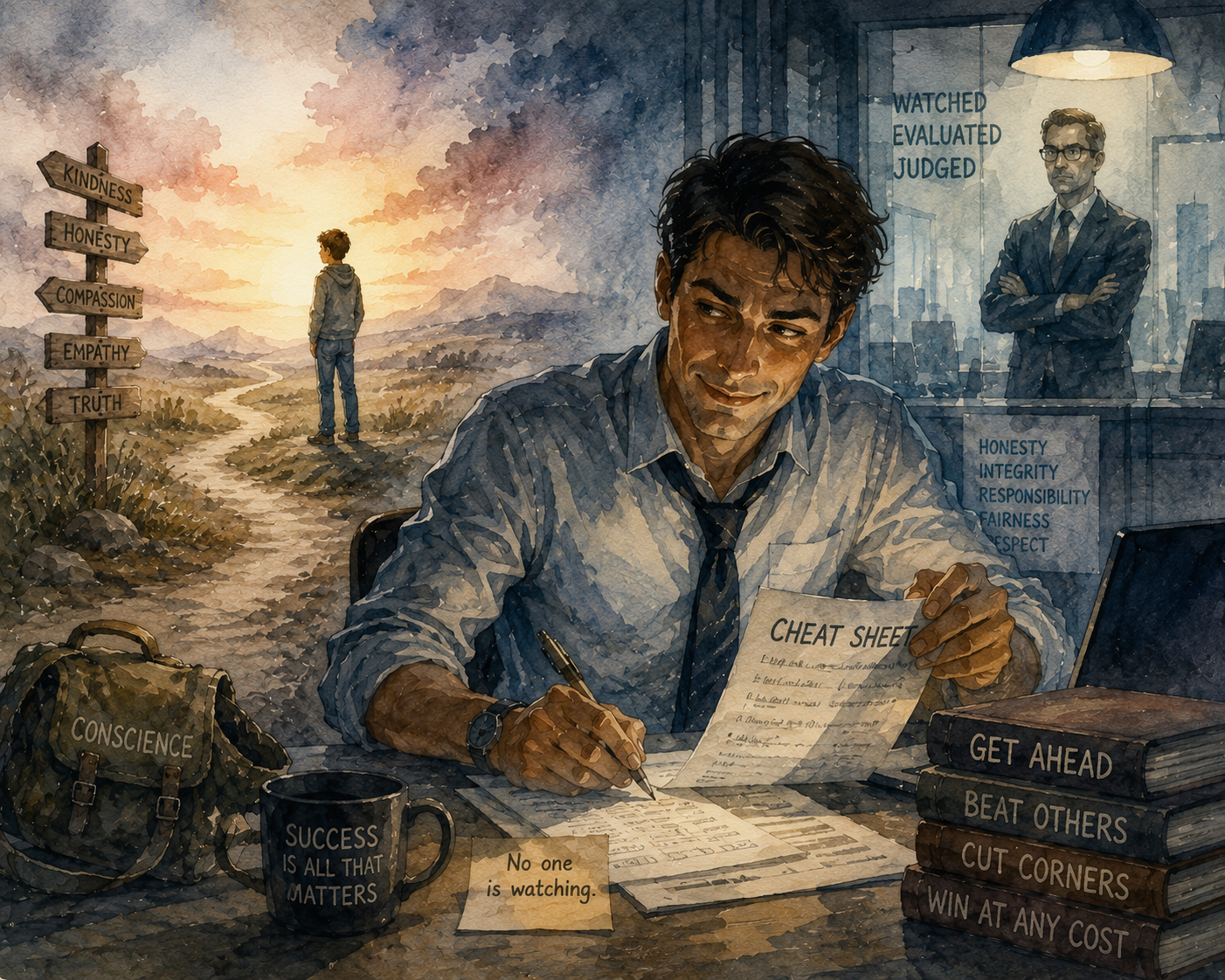
Follow that thread far enough, and you arrive somewhere uncomfortable: the boardroom that quietly overlooks fraud because the numbers look good. The official who accepts a bribe because "everyone does it." The bystander who films instead of helping. The neighbour who won't return an overpaid amount because no one will ever know. The public figure who lies without flinching because outrage has a shorter memory than truth.
We call this societal decay, and we are right to. But it is worth asking, honestly: where did these adults learn that the right thing only matters when someone is watching? They were not born that way. Somewhere, in a childhood very much like the one unfolding in our own homes right now, that inner voice was either strengthened or starved.
This is not a comfortable thought, and it isn't meant to be an accusation — every parent alive is doing their best with the hours and energy they have. But it is meant to be a wake-up call, softly delivered: the world does not decay in the courtroom. It decays in the nursery, one un-examined "no" at a time.
Replanting the Seed
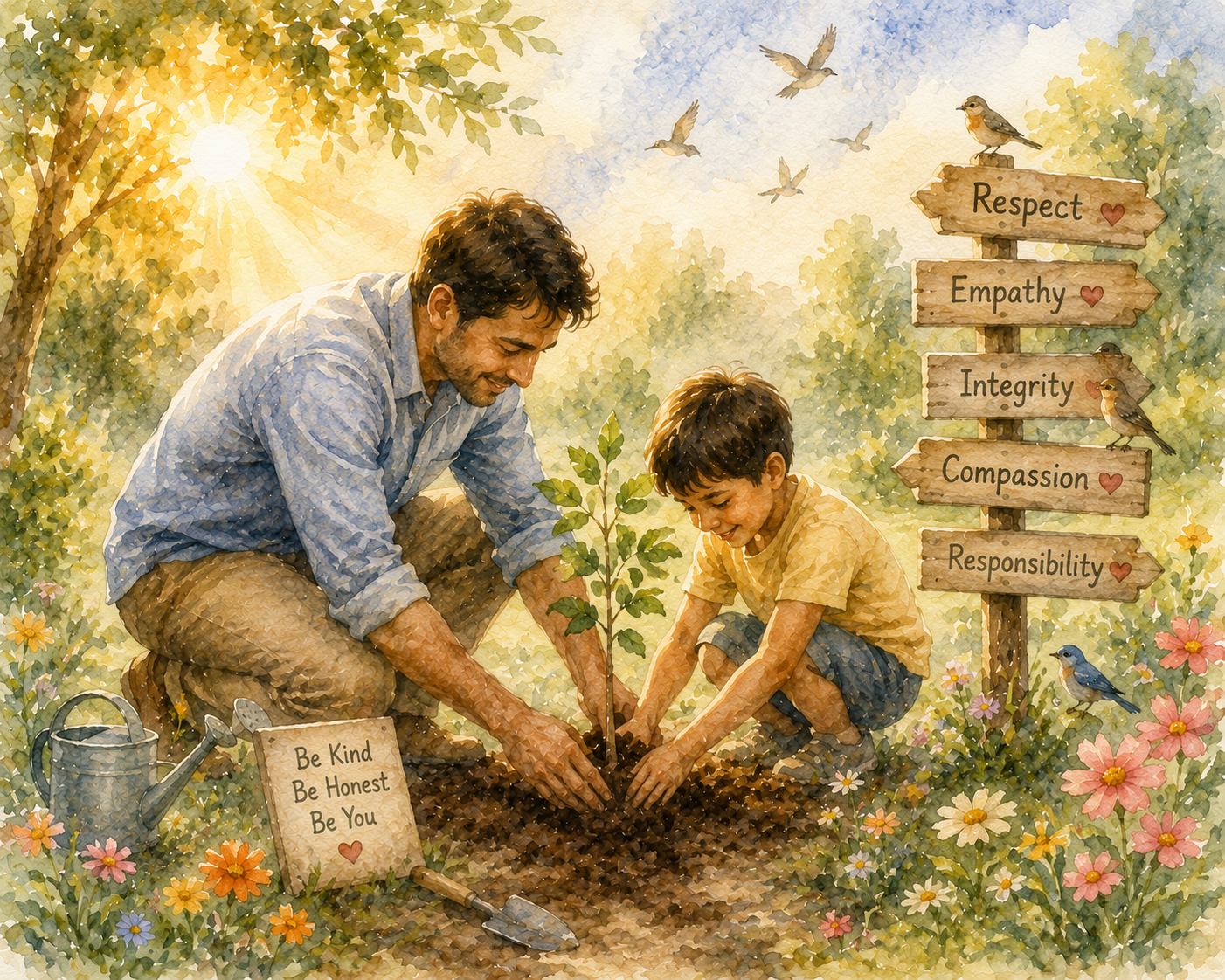
If this is where the unravelling begins, it is also, mercifully, where the mending can begin — and it does not require grand gestures. It requires attention, sustained across years, not a single "good values" lecture delivered once and considered complete.
Here is what I have seen work, both as an educator and as someone who has watched children grow into remarkably grounded adults:
Explain the why, every single time. When you tell a two-year-old "no," follow it — even if they can't fully understand yet — with the reason. Children absorb tone and intention long before they absorb vocabulary. "No" plus a reason plants reasoning. "No" alone plants only fear of consequence.
Let natural consequences teach, don't always rescue. When a child lies and it unravels on its own, resist the urge to smooth it over quickly. Sit in the discomfort with them. That discomfort is the lesson.
Praise character, not just achievement. "You noticed your friend was left out and included her — that was kind" should be said as often, if not more often, than "you got full marks." Children repeat what earns them warmth from us.
Model the conscience you want them to have. Children do not learn morality from what we say when we're teaching them. They learn it from what we do when we think they're not watching — how we speak about others, whether we return the extra change, whether we keep promises made in passing.
Keep the conversation alive at every age. The moral voice planted at three needs tending at eight, testing at thirteen, and trusting at seventeen. It is not a one-time inoculation. It is more like a garden — beautiful when tended, overrun the moment we assume it will simply take care of itself.
The Whisper That Becomes a Roar
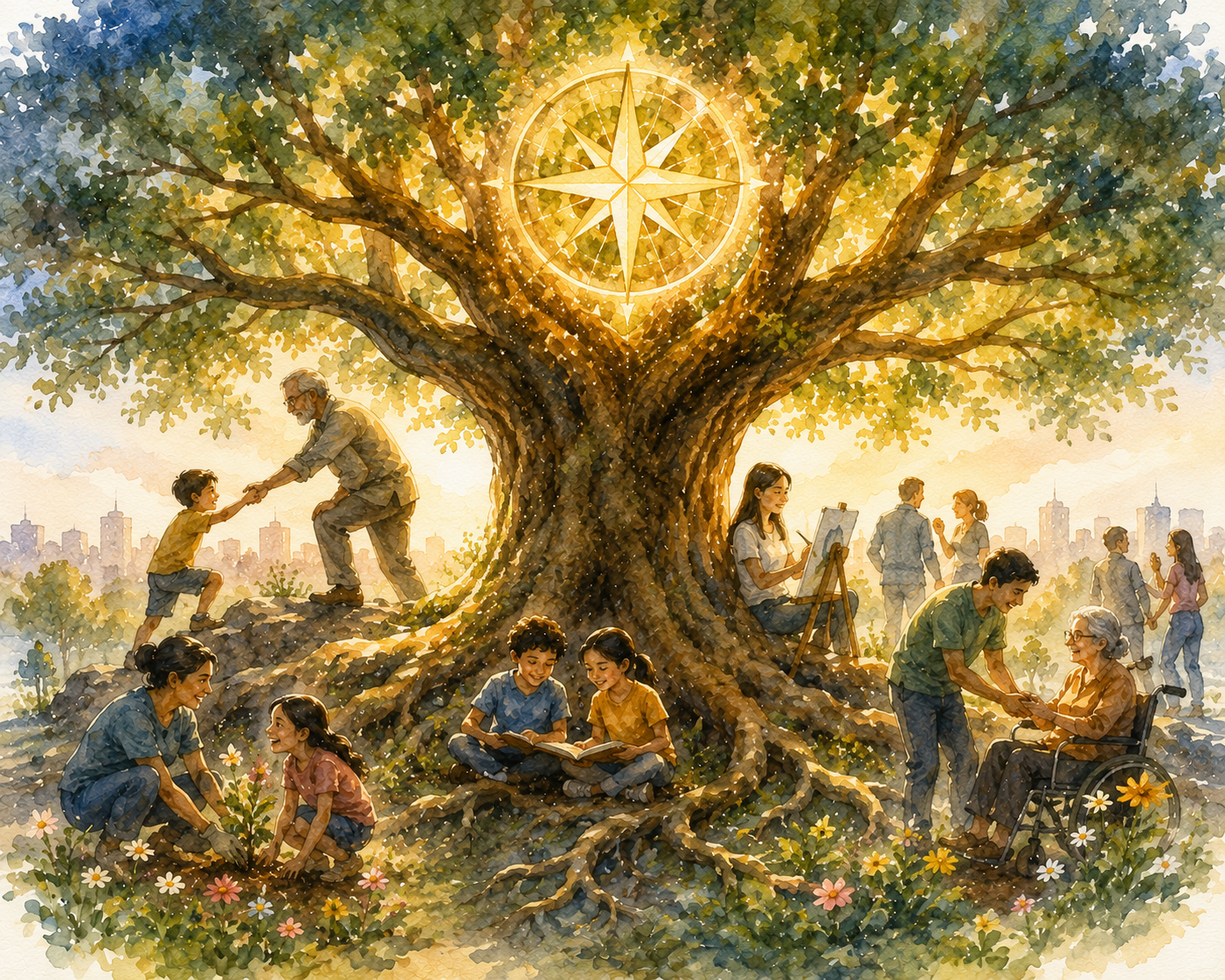
A child's first "no" is such a small thing. It rarely feels like it's shaping the future of a household, let alone a society. But every act of integrity we witness in an adult — every person who did the right thing when no one was looking, who told the truth when a lie would have been easier, who helped a stranger expecting nothing in return — began as a whisper someone took the time to plant and protect, years before the world ever tested it.
We cannot fix societal decay with policy alone, or with outrage on our timelines, or with nostalgia for a "better" past that likely had its own quiet failures. We can only fix it the way it broke — quietly, in one home at a time, in the small, unglamorous moments between a child's yes and a child's no.
That is where the moral compass of a person, and eventually of a world, is drawn.
And it is not too late — for any of us — to pick up the pencil again.
If this reflection moved something in you, I'd love to hear it. What is one moment from your own childhood — a "no" that came with a reason, or one that didn't — that shaped who you became? Share it with us.