LITTLE MINDS OPEN HEARTS
Little Storms, Steady Hands
5 Best Parenting Books for Raising a Toddler
If you have a toddler at home, you already know the particular exhaustion of this age — the tenderness and the tantrums arriving within the same five minutes. Every parent I know has, at some point, typed “best toddler parenting books” into a search bar at midnight, hoping someone out there has already figured this out. I didn't want to hand you another vague, copy-pasted list. So instead, I went through the actual reader reviews — the five-star praise, the honest two-star disappointments, the arguments in the comments — and put together the five books that genuinely, consistently rise to the top. Not because they're trendy, but because real parents keep returning to them, year after year.
I've arranged them below in the order I believe will serve you best: first, understanding what's actually happening in your toddler's mind; then, how to talk to them in the middle of a hard moment; then, how to hold a gentle boundary; next, how to nurture their fierce little independence; and finally, one comprehensive companion to carry you through it all.
A small, honest note before we begin: Two of these books stretch a little past toddlerhood, but I kept them because they're simply too good, and too trusted by other parents, to leave out.
|
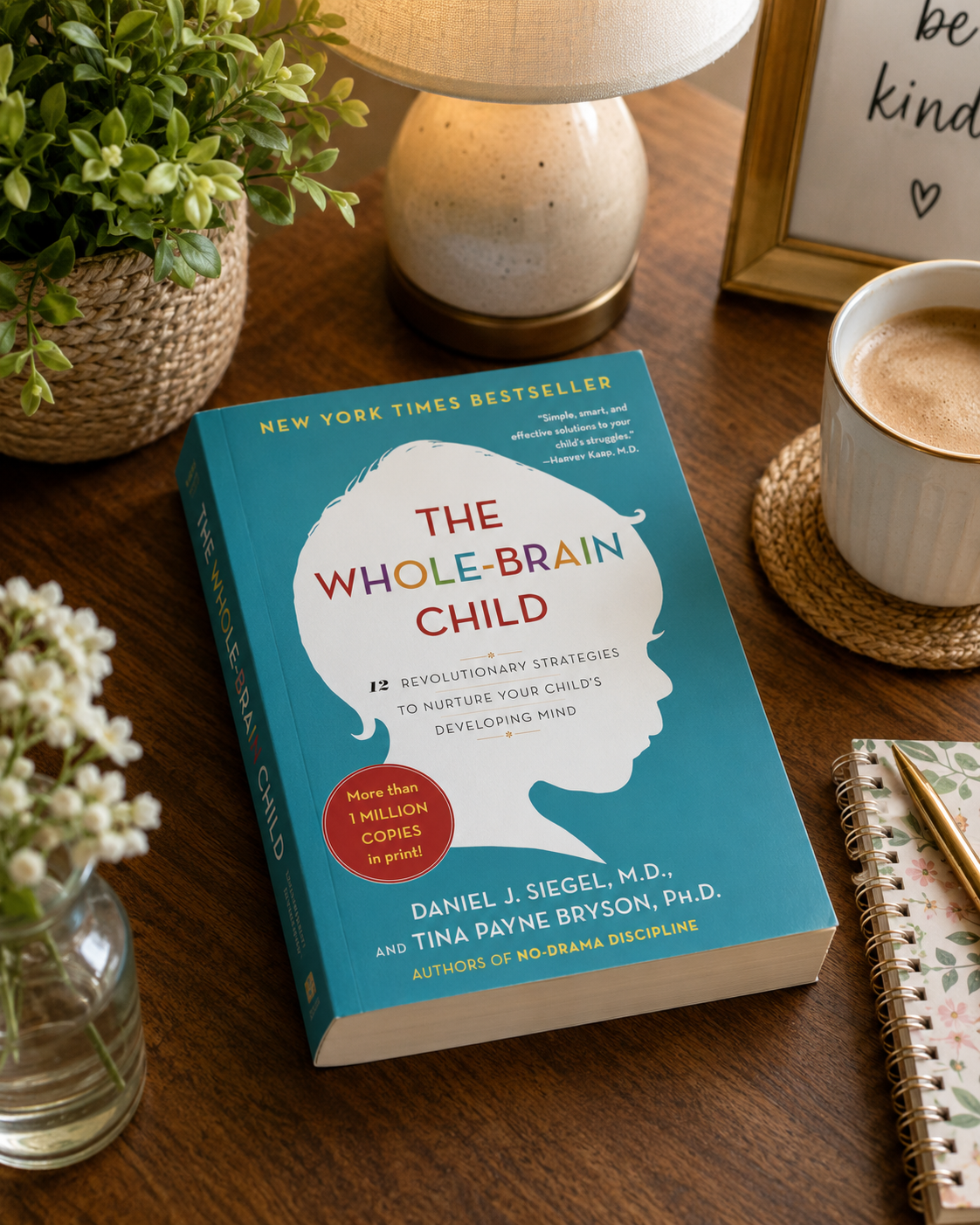
BOOK 1 The Whole-Brain Child by Daniel J. Siegel, MD & Tina Payne Bryson, PhD |
Best for: Understanding why your toddler behaves the way they do — before anything else
AT A GLANCE
• 12 practical, brain-based strategies explained in plain, everyday language
• Simple, memorable ideas like the “upstairs brain” and “downstairs brain,” and “name it to tame it”
• Written by a UCLA neuropsychiatrist and a child development specialist
• Includes illustrations, charts, and a one-page summary sheet for quick reference
• Over two million copies in print, translated into more than fifty languages
WHY IT COMES FIRST
Before you can respond to a meltdown with patience, it helps enormously to understand what is actually happening inside a toddler's brain in that moment. This book explains, gently and clearly, that the part of a toddler's brain responsible for calm decisions and self-control is still years from being finished. Their meltdowns are not manipulation — they are a very young nervous system being overwhelmed. Once that idea settles in, everything else on this list makes a great deal more sense.
WHAT READERS ARE SAYING
Parents and fellow experts alike consistently praise how the book turns complicated neuroscience into everyday, usable language. Psychologist Daniel Goleman described it as a book that turns ordinary interactions into real opportunities to shape a child's brain. Many readers say that simply understanding the “why” behind tantrums helped them stay calmer in the moment themselves. A smaller number feel the word “revolutionary” oversells what is, at heart, well-established developmental science — though even they tend to agree the strategies genuinely work in the middle of a hard afternoon.
KEEP IN MIND
This book leans more toward understanding and calming big emotions than giving you exact words for everyday negotiations — that's where the next book on this list comes in.
|
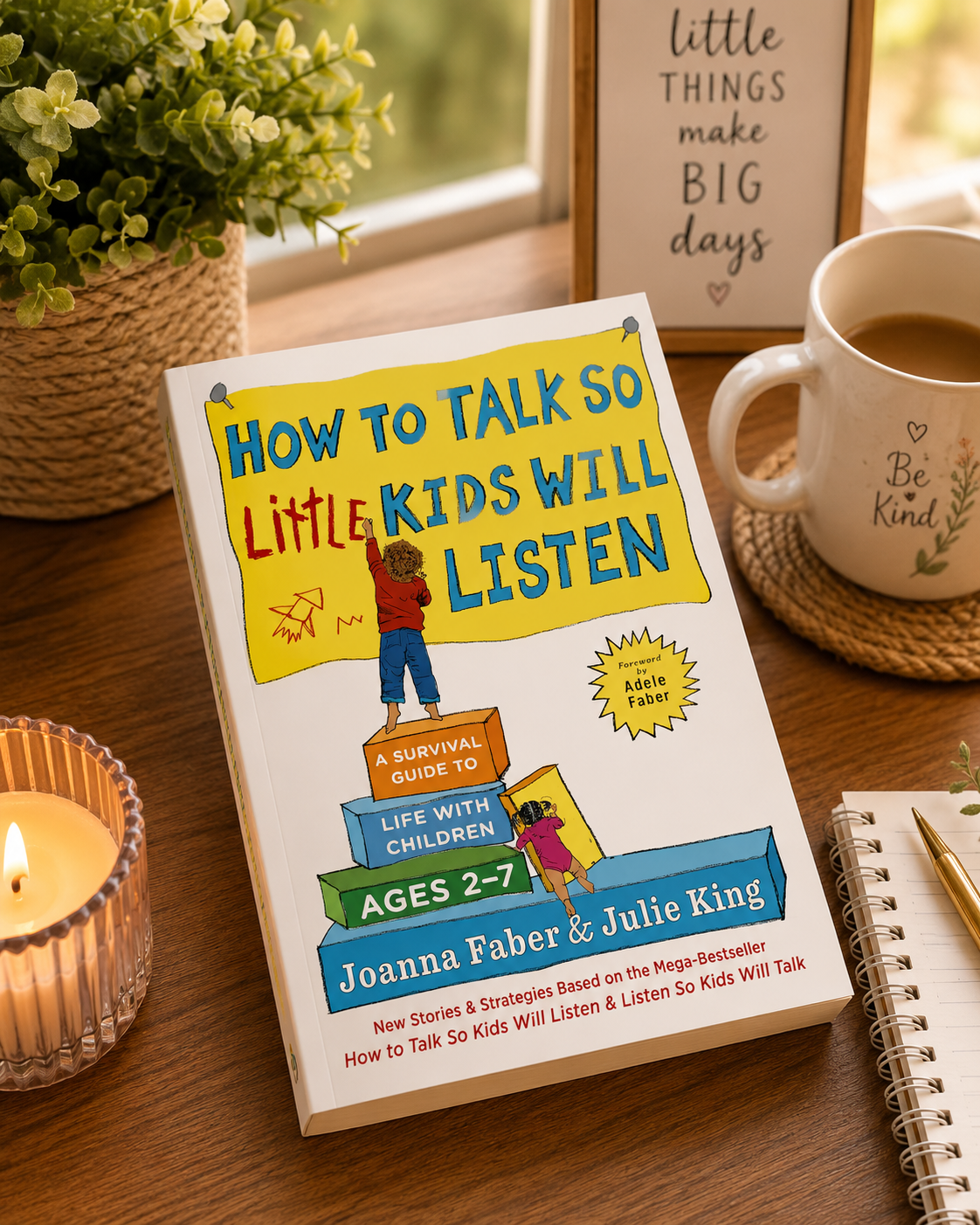
BOOK 2 How to Talk So Little Kids Will Listen by Joanna Faber & Julie King |
Best for: The actual words to use, day to day, with children ages two to seven
AT A GLANCE
• A modern continuation of the well-loved “How To Talk” tradition, written by the original author's daughter
• Built around real, relatable scenes — grocery-store meltdowns, refusing to get dressed, sibling squabbles
• Core method: acknowledge the feeling first, offer the solution second
• A warm, story-driven voice rather than a dry instruction manual
• Drawn from years of the authors' own parenting workshops with real families
WHY IT COMES NEXT
Once you understand why your toddler behaves the way they do, this book teaches you exactly what to say instead of the phrases most of us reach for out of habit — “you're fine,” “stop crying,” “because I said so.” It replaces these with language that actually reaches a small child, because it acknowledges their feelings before asking anything of them.
WHAT READERS ARE SAYING
Many parents describe this as the book they return to again and again, calling it a genuine survival guide for the toddler and preschool years. Several mention that learning to acknowledge feelings first — instead of jumping straight to a solution — changed the entire tone of their home. Some critical readers find the writing style exaggerated or a little repetitive, saying the playful tone tries too hard. But even they tend to admit that the central lesson, that children need to feel heard before they can listen, genuinely lands.
KEEP IN MIND
If long anecdotes aren't your style, skim to the “what to say instead” boxes — many parents use the book this way with great success.
|
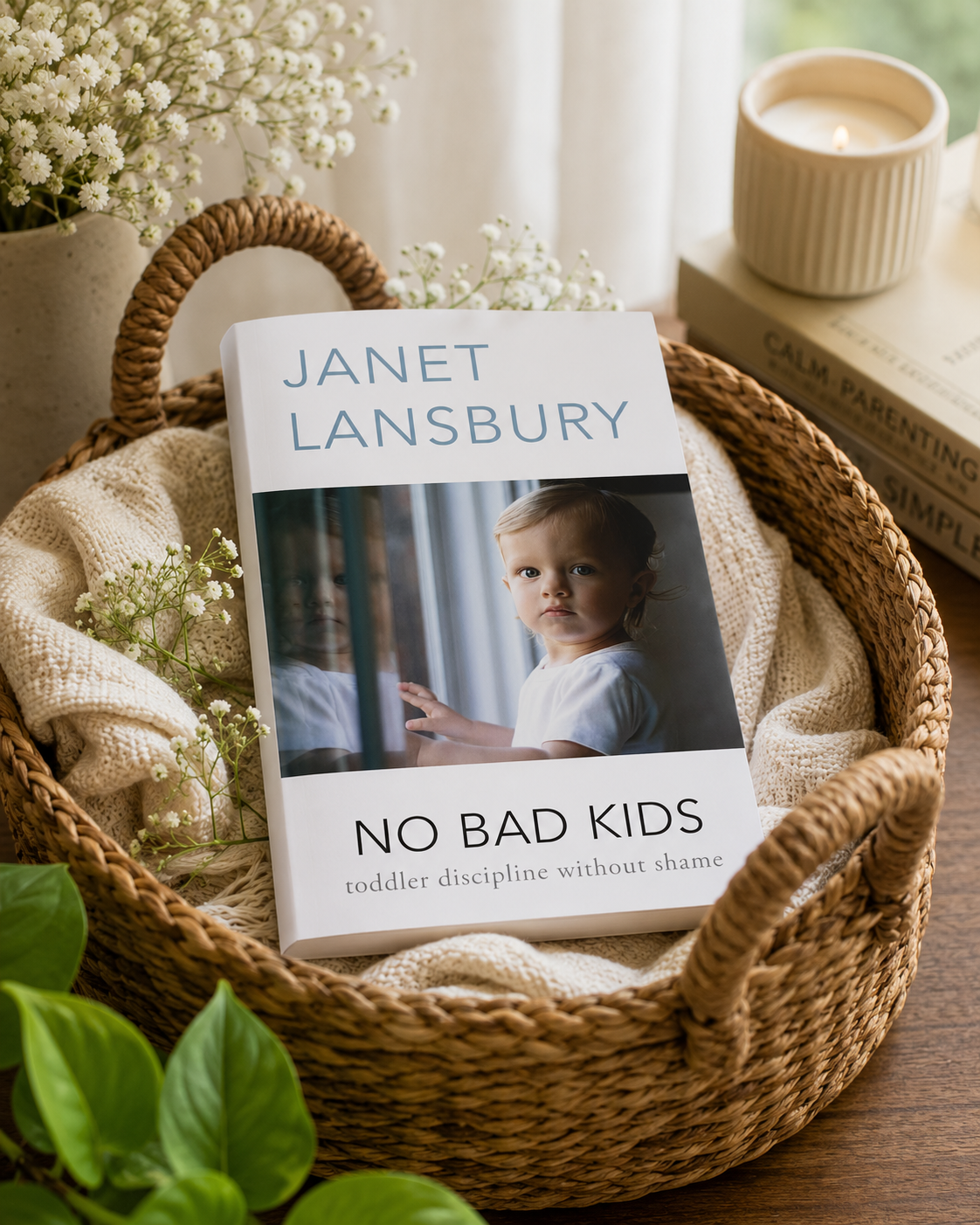
BOOK 3 No Bad Kids: Toddler Discipline Without Shame by Janet Lansbury |
Best for: Setting loving, calm boundaries — without yelling, bribing, or shame on either side
AT A GLANCE
• Rooted in the RIE (Resources for Infant Educarers) approach, developed under child specialist Magda Gerber
• A collection of Lansbury's most widely read writing, organised by common toddler struggles
• Covers hitting, biting, tantrums, testing limits, and everyday cooperation
• Reframes discipline as a form of help, not punishment
• Simple, repeatable phrases you can use in the moment, drawn from over three decades of hands-on experience
WHY IT COMES NEXT
Once you know how to talk with your toddler, this book teaches you how to hold a boundary while doing it — calmly, and without shame for either of you. Lansbury's central idea is disarmingly simple: a toddler who is “misbehaving” is not being bad. They are asking, in the only language they have, for your calm and steady help.
WHAT READERS ARE SAYING
Reviewers frequently describe this book as changing how they see toddler behaviour altogether — several call the shift from “he's being naughty” to “he needs my help” the single biggest change in their parenting. Tina Payne Bryson, co-author of The Whole-Brain Child, praised the book for helping parents calmly address behaviour while still honouring a child's feelings. A handful of readers find Lansbury's firmness in group settings, such as not letting a toddler climb on a parent during playgroup, a little rigid for their taste — but her respect-based approach to discipline remains one of the most widely recommended in this space.
KEEP IN MIND
This one reads best in small doses, a chapter dipped into as a specific issue comes up, rather than cover to cover in one sitting.
|
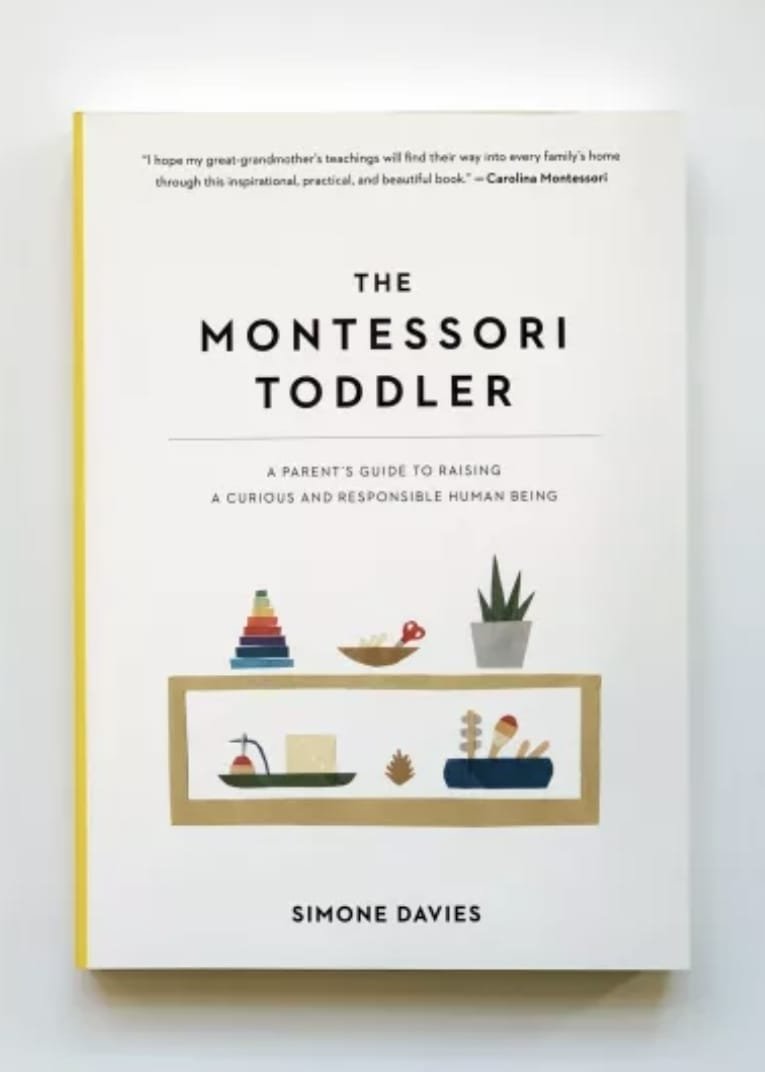
BOOK 4 The Montessori Toddler by Simone Davies |
Best for: Building your toddler's independence, and a home that quietly supports it
AT A GLANCE
• Written by a certified Montessori teacher who has run toddler classes for over a decade
• Practical guidance on setting up your home — a low shelf of toys, a safe “yes space”, child-sized tools
• Chapters on sleep, food, cooperation, and the “I can do it myself” stage
• Warm, beautifully illustrated, and genuinely practical rather than purely aesthetic
• One of the bestselling parenting titles of the last decade, with the series exceeding 200,000 copies in print
WHY IT COMES NEXT
With calmer communication and gentle boundaries already in place, this book shows you how to step back a little and let your toddler build real competence — pouring their own water, choosing their own clothes, helping with real household tasks. It also reframes a lot of “difficult” toddler behaviour, like insisting on the exact same routine every single day, as a very healthy need for order rather than stubbornness.
WHAT READERS ARE SAYING
Readers consistently praise how practical the book is underneath its lovely design, with several noting it changed how they see their toddler's insistence on repetition — as development, not defiance. Many say the ideas are genuinely easy to apply, even in a small home. A few reviewers are more cautious, describing certain sections as feeling a little idealised compared to the reality of a busy household — but most still call it one of the most calming books they read as a new parent.
KEEP IN MIND
Your home doesn't need to look like the photographs inside — most readers agree that the underlying principles matter far more than the aesthetic.
|
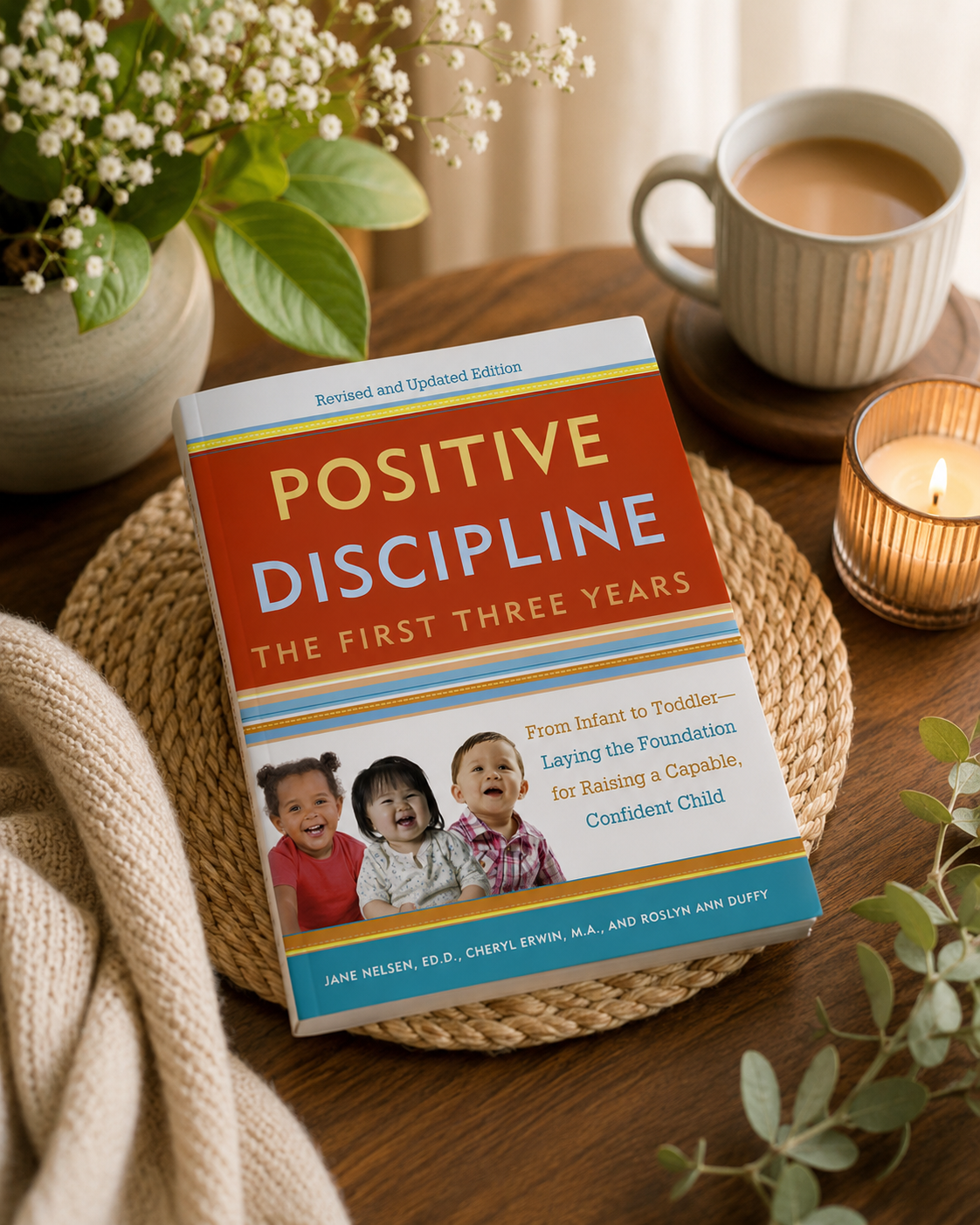
BOOK 5 Positive Discipline: The First Three Years by Jane Nelsen, Cheryl Erwin, MA & Roslyn Ann Duffy |
Best for: One comprehensive, kind-but-firm companion for birth through age three
AT A GLANCE
• Covers the entire journey from infancy through toddlerhood in a single guide
• Built around the “kind and firm” philosophy — respect for the child and clear limits, together
• Directly addresses the power struggles most families face: sleep, eating, potty training
• Filled with real scenarios from other parents and caregivers, not just theory
• Revised with current neuroscience research; part of a trusted series with millions of copies sold
WHY IT COMES LAST
This is the book that ties everything together. By now you understand your toddler's brain, you know how to talk with them, how to hold a boundary gently, and how to nurture their independence — this book weaves all of it into one calm, comprehensive companion you can return to across the entire toddler stretch, from their first birthday to their fourth.
WHAT READERS ARE SAYING
This has been a trusted family reference for decades, with the wider Positive Discipline series often described as offering a commonsense approach that can feel missing elsewhere. Long-time readers particularly value its real-life scenarios for everyday situations like bedtime battles and potty-training standoffs. A few readers find some specific examples or phrasing a little dated in places, but the underlying “kind and firm” framework continues to be recommended by therapists and parenting educators alike.
KEEP IN MIND
Treat this as a reference you return to at different ages, rather than a book you read once and shelve — keep it close, not just read once.
Before You Go
None of these five books will hand you a perfect toddler, and I say that with love — because no book can. What they can do, all five of them together, is help you understand your child a little better. And in doing that, they help you meet the loud, wonderful, exhausting chaos of these years with a little more patience, and a lot less guilt.
If you have to choose just one place to start, begin with whichever problem is loudest in your home right now — a tantrum, a bedtime battle, a toddler who won't share — and let that lead you to the right book on this list. The rest will follow, the way good parenting wisdom always does: one small, imperfect day at a time.
With warmth,
Little Minds Open Hearts